
Service
Catch-Up and Clean-Up Bookkeeping Services
I specialize in helping cleaning, pool care, landscaping, and pressure washing companies stress less about their books. I understand the busy seasons and the need for clear, reliable numbers to guide your decisions.

Behind on your books? Let’s get you caught up and moving forward.
I’m Katya Ruiz, owner of Bold City Bookkeeping and a QuickBooks Online ProAdvisor. I provide catch-up bookkeeping services and clean-up bookkeeping for home service businesses.
Maybe it’s been a few months. Maybe it’s been a few years. Maybe you never really got your bookkeeping started in the first place. Or maybe someone else was handling it, but things were left unfinished, unclear, or unreliable.
Whatever got you here, the goal is the same: figure out where things stand, fix what needs fixing, and get your books back to a place where they’re accurate and useful.
And no, you don’t need to get everything organized before you reach out. Helping you figure out what we need and where to start is part of my job.
Catch-Up or Clean-Up Bookkeeping: What’s the Difference?
Catch-up bookkeeping is for businesses that have fallen behind, whether that means a few months, a few years, or bookkeeping that never really got started.
Clean-up bookkeeping is for businesses where the books exist, but something isn’t quite right. Maybe accounts haven’t been reconciled, meaning nobody has checked QuickBooks against the bank and credit card statements to make sure everything matches. Maybe transactions are missing or incorrectly categorized, or the financial reports simply don’t make sense.
Sometimes you need one. Sometimes you need both.
Either way, it’s one service, shaped around the condition of your books and the specific problems that need solving. Whether you need to catch up bookkeeping that stopped months ago or clean up bookkeeping that never matched the bank, I start the same way: figuring out what I’m working with and where the numbers stopped being reliable.
How Much Does Catch-Up Bookkeeping Cost?
Catch-up and clean-up work is billed hourly because every business starts from a different place. The total cost depends on the amount of work needed to bring your books up to date and make them reliable again.
The main factors that affect the cost include:
- How far behind the books are. A larger backlog means more months of activity and supporting documents to review.
- When the accounts were last reconciled. I may need to review everything that happened after the last month your QuickBooks records were confirmed to match your bank and credit card statements.
- The number of transactions involved. A higher transaction volume requires more time to review, categorize, and verify.
- How much correction is needed. Books with duplicate transactions, incorrect balances, or years of miscategorized activity will require more clean-up work.
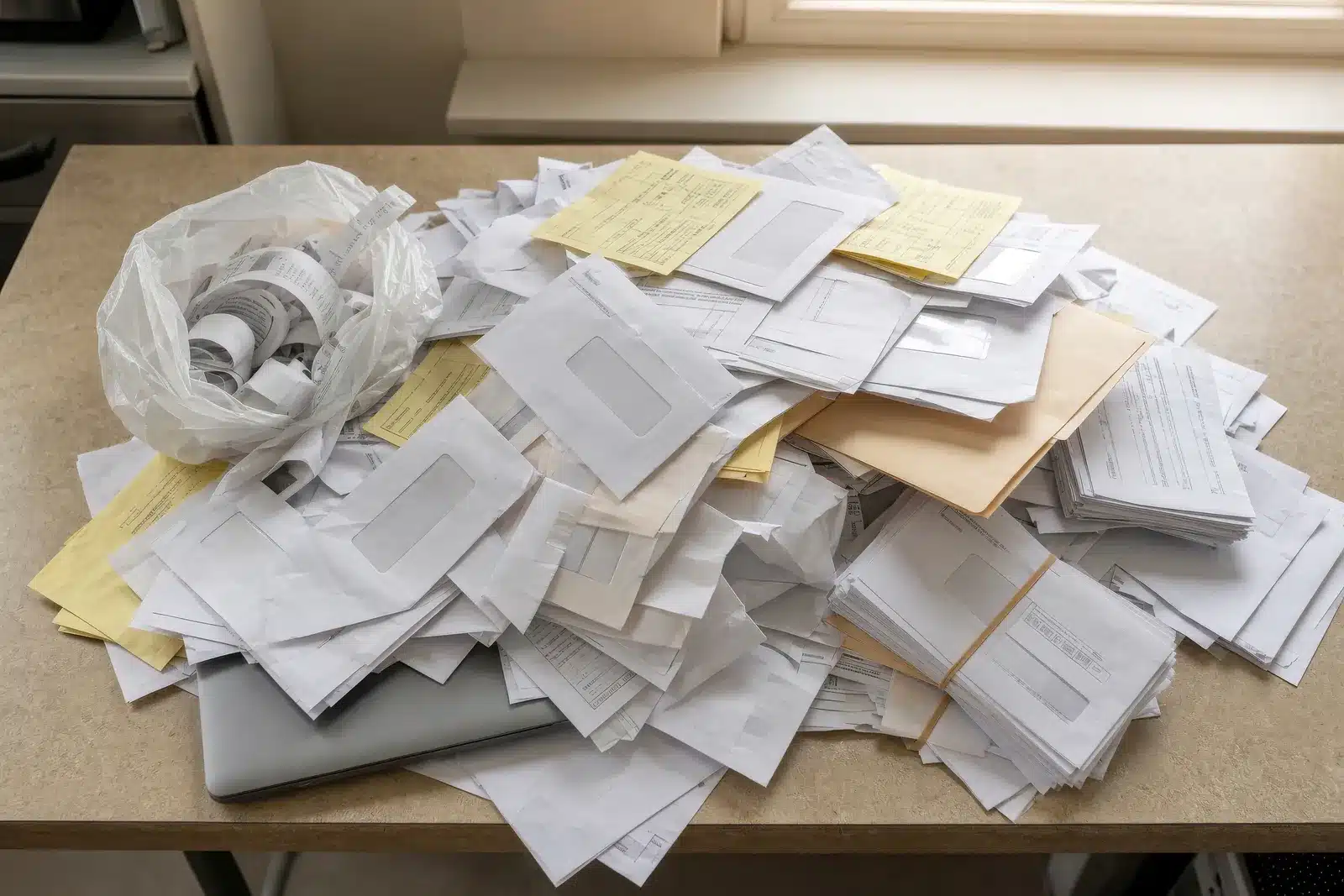
Depending on the condition of your books, the project may include reconciling accounts, correcting improperly categorized transactions, and cleaning up loans, assets, credit cards, and other balance sheet accounts.
My catch-up bookkeeping services are customized to your situation, so you only pay for the work your books actually need. If the existing file is extremely messy, I may recommend starting with a fresh set of books when that would be more efficient and cost-effective than trying to undo years of errors.
Why Is Catch-Up Work Billed Hourly Instead of a Flat Fee?
Even after an initial review, it isn’t always possible to see every issue until I begin working through the books. Missing statements, unreconciled accounts, incorrect balances, duplicate transactions, and other errors can all affect the time required.
Hourly billing allows me to tailor the work to what your books actually need without building unnecessary costs into a flat-rate quote. For larger projects, I invoice progressively as the work is completed and provide weekly updates, so you always know what has been completed, what you’re paying for, and what still needs attention.
When Does Starting Fresh Make More Sense Than Fixing Old Books?
When the existing books are extremely messy. Undoing years of incorrect bookkeeping can take longer than beginning with a fresh QuickBooks Online file. In those situations, I may recommend starting over with clean opening balances to reduce the time and cost of moving forward.
Opening balances are the starting amounts for each account, such as your bank, credit card, and loan balances, as of the day the new file begins.
This isn’t the default. I recommend a fresh start only when it’s the quicker, less costly way forward.
How Long Does Catch-Up Bookkeeping Take?
Every business is different, but as a rough guide, here’s what I see:
- A business that’s approximately 3 months behind can often be caught up within a couple of weeks.
- A business that’s 1 or 2 years behind may take anywhere from 1 to 3 months.
Three things move the timeline: how many transactions there are to review, what condition the books are in, and how quickly you provide answers and any documents needed. There’s no limit on how far behind the books can be, and I’m happy to take on books that are in real trouble.
How Does Catch-Up and Clean-Up Bookkeeping Work?
Every project begins with a short discovery call so I can learn where your books stand, how far behind you are, and what you need most right now.

From there, the process typically looks like this:
- I review your books. I look at your QuickBooks file, account reconciliations, financial reports, and other available information to identify what needs to be caught up or corrected.
- I recommend the best path forward. Depending on the condition of your books, that may mean cleaning up the existing file or starting with a fresh set of books when rebuilding would save time and money.
- I work through the books in order. This may include reconciling bank and credit card accounts, properly categorizing transactions, correcting errors, and cleaning up loans, assets, liabilities, and other balance sheet accounts.
- I keep you informed. You can expect questions along the way, especially when a transaction requires context that only you can provide. For larger projects, I invoice progressively as the work is completed and send weekly updates so you always know what has been finished and what still needs attention.
- We review where things stand. Once the work is complete, you’ll have accurate, up-to-date books and a clearer financial starting point. We can also discuss whether you need ongoing monthly bookkeeping or any additional support going forward.
The entire process can be completed virtually using QuickBooks Online and secure file sharing. I’ll explain what I find in plain English, without judgment or confusing accounting jargon.
What Do You Need From Me Before We Start?
I’ll typically ask for all business bank and credit card accounts to be connected to QuickBooks. I will also need bank, credit card, and loan statements for the period we’re catching up.
If I need something from you, I’ll tell you exactly what I need and why.
You don’t have to get organized before you hire someone to help you get organized. I’m here to help. And remember, the quicker you provide answers and send statements, the quicker the catch-up moves along.
What Problems Do You Usually Find in Books That Are Behind?
A few problems come up again and again in books that are behind, and fixing them is a big part of my bookkeeping clean-up work.
- Unreconciled bank and credit card accounts. If an account hasn’t been reconciled, QuickBooks may not match the bank, so any report built on it can’t be trusted.
- Duplicate or missing transactions. Duplicates count money twice, and missing transactions leave it out entirely.
- Expenses recorded in the wrong categories. Each expense gets assigned to a category on your chart of accounts, which is the list QuickBooks sorts money into. When an expense lands in the wrong one, your profit and loss report gives a false picture of where the money goes. That report shows what came in, what went out, and whether the business made a profit.
- Incorrect loan or asset balances. These throw off your financial statements, especially the balance sheet, which shows what the business owns, what it owes, and what’s left.
- Problems created by connecting QuickBooks to apps such as Jobber or Housecall Pro, including duplicate transactions.
Why Can Connecting Jobber or Housecall Pro to QuickBooks Cause Problems?
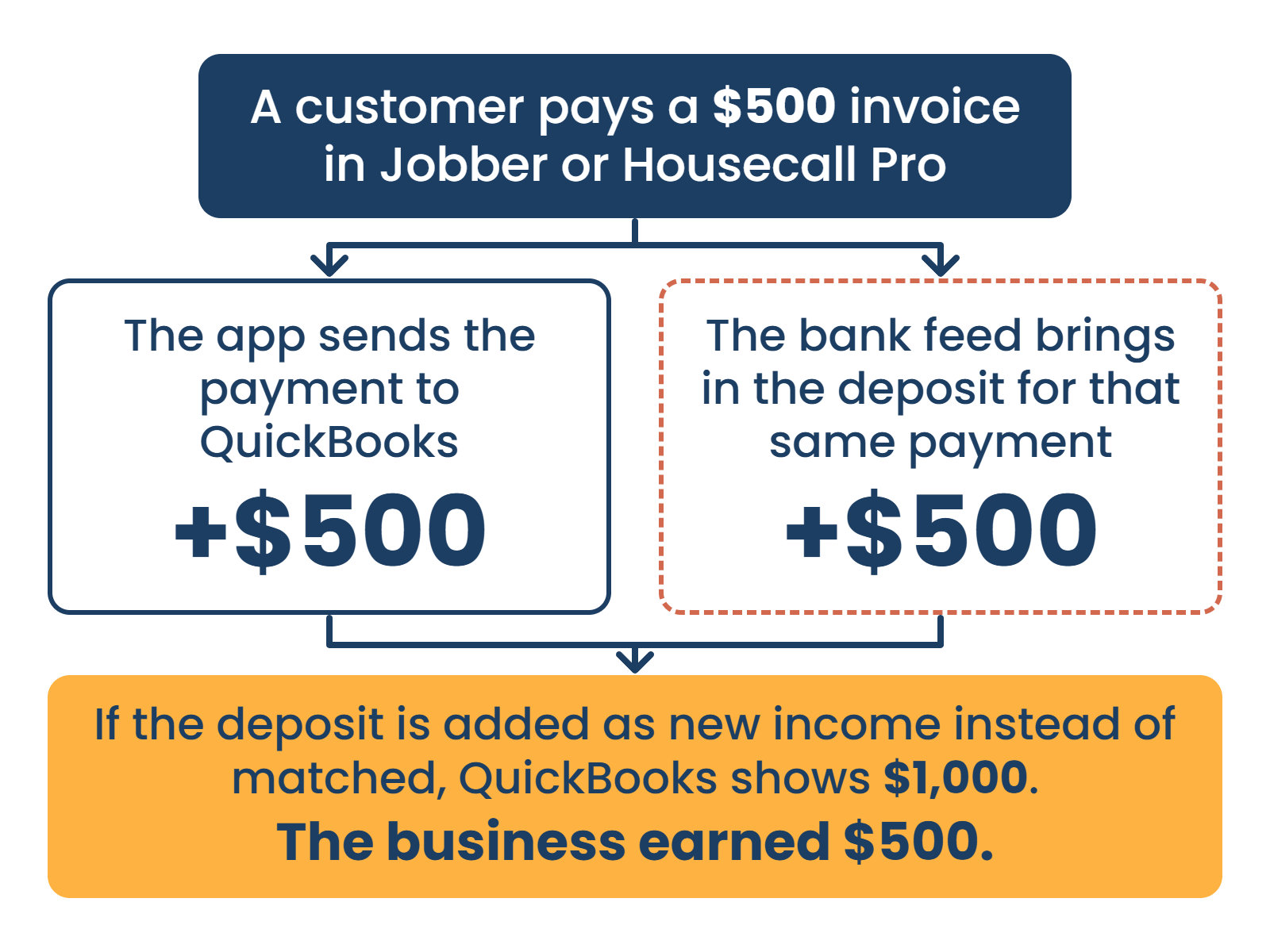
Because the same money can end up in QuickBooks twice.
Both apps can send invoices and payments into QuickBooks Online automatically. When your bank account is also connected to QuickBooks, the bank feed brings in the deposit for that same payment. If that deposit gets added as new income instead of matched to the payment the app already sent, the money is recorded twice. Card processing fees make matching harder because the deposit that reaches the bank can be smaller than the invoice.
In my experience, connecting these platforms directly to QuickBooks often creates more bookkeeping problems than it solves, including duplicate or incorrectly recorded transactions. So I generally recommend keeping the systems separate. Jobber or Housecall Pro handles scheduling, estimates, customer invoicing, and day-to-day operations, and QuickBooks Online stays the accounting system of record, the one place your official books live.
Untangling the duplicates these connections leave behind is a regular part of the clean-up I do.
Will Cleaning Up My Books Affect Tax Returns I’ve Already Filed?
I generally make the corrections in the first open year, meaning the earliest year you haven’t filed taxes for yet, and move forward from there. If the clean-up uncovers something that could affect a return you’ve already filed, I’ll let you know, and I can coordinate with your CPA so the two of you can decide the best way to handle it.
As your bookkeeper, I work with your CPA to make tax preparation and tax filing go smoothly.
What If My Books Aren’t in QuickBooks Online?
I work exclusively in QuickBooks Online. If your records are in other accounting software such as Xero or FreshBooks, or in spreadsheets, the first step is setting up QuickBooks Online and bringing over the information needed to complete the catch-up or QuickBooks clean-up. If there are no records yet, setting up QuickBooks Online is still the first step.
What Happens After My Books Are Caught Up?
Your books will be accurate and up to date, and you choose what comes next.
When we’re finished, you should have a much clearer understanding of what your business is making, what you’re spending, where your money is going, and how the business is actually performing. More importantly, you’ll have financial information you can trust and use moving forward.

If you’d like me to maintain the ongoing bookkeeping, I can take it on with monthly bookkeeping. I keep your financial records up to date month by month, so you don’t end up behind again. If you’d rather keep the books yourself, I offer QuickBooks setup and training, tailored to what you need to know. Neither one is required.
Ready to Get Caught Up?
Whether you’re a few months behind, a few years behind, or simply aren’t confident your books are right, we can start where you are.
Books a mess? I got you!

Get In Touch
We’ll start with a simple conversation about where things stand and what you need most right now.
How I Help